
Table of Contents
- Why New Clothes Feel Stiff
- How to Soften Stiff Cotton Fabric
- Benefits of Washing New Clothes Before Wearing
- [How to Prevent Pilling on Cotton Hoodies](#how to-prevent-pilling-on-cotton-hoodies)
- Air Drying vs Machine Drying: Impact on Fabric Stiffness
- Machine Maintenance and Water Quality
- Conclusion
Last Updated: September 2, 2026
Why New Clothes Feel Stiff
When you unwrap a new garment fresh from the shop, that stiff, crispy texture isn't a sign of poor quality. It's actually the result of several deliberate manufacturing processes designed to keep clothes looking pristine during production, storage, and transport. Understanding why clothes feel stiff when new, and knowing how to fix it, makes the difference between a garment that feels uncomfortable for weeks and one that softens into that lived-in comfort you're after.
At Steve's Finds, we know our customers value that broken-in feel from day one. Our vintage-inspired collection is designed with comfort in mind, but even the best-crafted pieces benefit from proper preparation before wearing. The stiffness you experience isn't permanent, and it's entirely manageable with the right approach.
Manufacturing finishes and sizing agents
Manufacturers apply chemical finishes and sizing agents to fabric during production to maintain structure, prevent wrinkles, and protect the garment during shipping. These coatings give new clothes their crisp appearance and firm hand feel. Sizing, a starch-like substance, is the primary culprit behind that cardboard-like texture you notice when you first put on new clothes (peer-reviewed research).
The sizing serves a practical purpose in manufacturing. It stabilises the weave, prevents fraying during cutting and sewing, and keeps the fabric from shifting during the dyeing process. Without it, garments would arrive damaged or misshapen. However, once you bring a garment home, that sizing needs to be removed through washing to reveal the true fabric beneath.
Cotton garments are particularly prone to stiffness because cotton absorbs sizing readily and holds onto it stubbornly. Synthetic blends often feel slightly softer initially, but they still carry residual finishes that affect drape and comfort. The good news is that a single wash typically removes most of the sizing, though multiple washes improve softness considerably.

Hard water minerals and residue buildup
Hard water, water containing high levels of calcium and magnesium minerals, interacts with detergent and fabric in ways that amplify stiffness. When these minerals accumulate on fabric fibres, they create a layer of residue that prevents the fibres from moving freely. This mineral buildup is especially problematic in areas with naturally hard water.
The minerals don't just sit on the surface. They bond with soap residue and fabric softener, creating a compound coating that hardens fabric rather than softening it. This is why some people find their clothes get progressively stiffer with repeated washing, even though they're using softeners. The minerals trap the softening agents, preventing them from reaching the fibres.
Testing your water hardness can reveal whether this is contributing to your stiffness problem. Hard water typically contains more than 120 milligrams per litre of dissolved minerals. If your water falls into this range, you may benefit from using a water softening agent or adjusting your washing routine to counteract mineral accumulation.
Excessive detergent and soap scum
Using too much detergent is one of the most common reasons clothes feel stiff after washing. Excess detergent doesn't rinse away completely, leaving a film on fabric that stiffens it. This residue builds up with each wash, making the problem progressively worse.
Modern washing machines require far less detergent than older machines because they're more efficient at agitation and water circulation. Many people continue using the quantities they learned from older machines or follow the dosage on the bottle without accounting for their specific load size and water hardness. A quarter to a half of the recommended amount is often sufficient for typical loads.
Soap scum, the combination of detergent residue and mineral deposits, accumulates inside washing machines as well as on fabric. This buildup can transfer back onto clothes, contributing to stiffness and dullness. Cleaning your washing machine regularly (monthly is a reasonable target) prevents this transfer and improves overall wash quality.
How to Soften Stiff Cotton Fabric
Stiff cotton clothes respond well to targeted softening techniques. The key is understanding that you're not fighting against the fabric itself, you're removing or neutralising the coatings and residues preventing the fibres from moving naturally.
Pre-wash new garments properly
Before wearing any new garment, wash it on its own or with similar colours to avoid dye transfer. Use cold or warm water (not hot, which can set stiffness) and add a small amount of mild detergent, roughly a quarter of what you'd normally use for a full load.
Skip fabric softener on the first wash. Let the detergent do the work of removing sizing. Adding softener before the sizing is gone traps it on the fabric, making the stiffness worse rather than better. A single rinse cycle isn't enough; run an extra rinse to ensure all detergent residue is removed.
After the first wash, dry the garment on a drying rack or clothesline in natural light rather than a machine dryer. This gentle approach allows the fabric to relax without heat-induced stiffness. If you must use a machine dryer, use the lowest heat setting and remove the garment while still slightly damp.
Use fabric softeners and natural alternatives
Commercial fabric softeners work by coating fibres with oils and waxes that reduce friction between them. This makes fabric feel smoother and softer. However, they only work effectively if the underlying stiffness, the sizing and mineral deposits, has already been removed. Apply softener to fabric that's already stiff from sizing, and you're just layering one coating over another.
White vinegar is a popular natural alternative that works through a different mechanism. The acetic acid in vinegar helps dissolve mineral deposits and soap residue without leaving an oily coating (the NIH). Add half a cup to the final rinse cycle. The smell dissipates as the fabric dries, and the result is noticeably softer fabric without the chemical residue of commercial softeners.
Baking soda can also help neutralise detergent residue. Add half a cup to your wash cycle along with a reduced amount of detergent. This combination removes stiffness-causing buildup while being gentler on fabric than high-detergent washes.
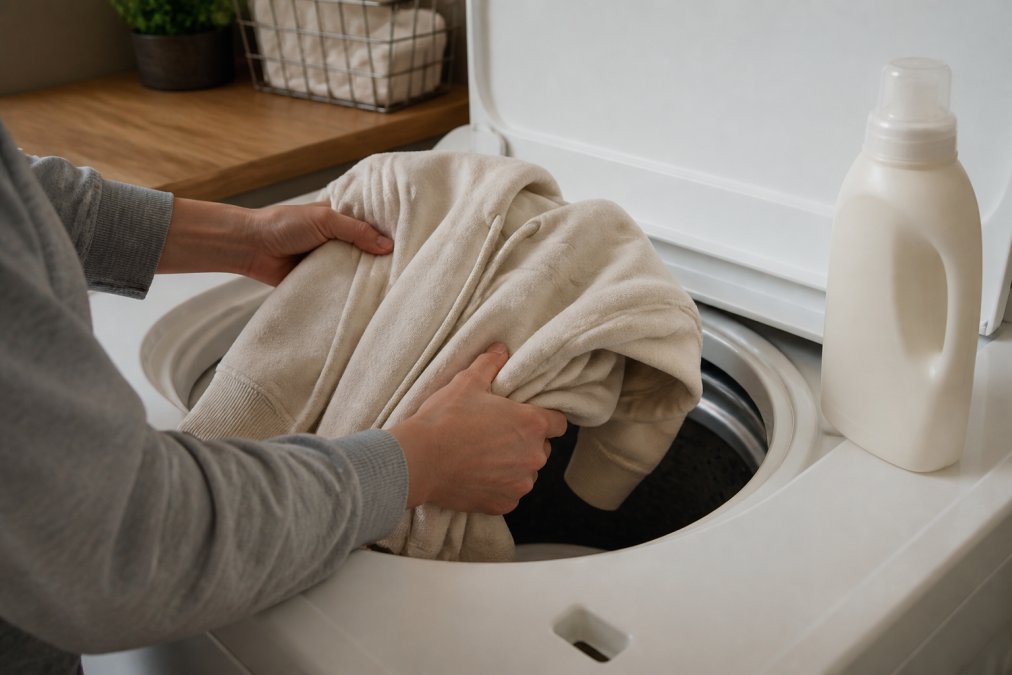
Optimise your rinse cycle and water temperature
The rinse cycle is where most stiffness problems are solved or created. Insufficient rinsing leaves detergent and sizing residue on fabric. Many modern washing machines have reduced rinse cycles as a water-saving measure, but this works against softness.
Run an extra rinse cycle as standard practice for new clothes. Some machines have a "heavy rinse" or "extra rinse" option specifically designed for this. If yours doesn't, simply run a second rinse cycle using water only (no detergent).
Water temperature affects how well detergent rinses away. Cold water leaves more residue than warm water, but hot water can set stiffness into certain fabrics. Warm water (around 30-40 degrees Celsius) is the sweet spot for most cotton garments, it rinses effectively without damaging the fabric or setting stiffness.
Benefits of Washing New Clothes Before Wearing
Washing new clothes before wearing them isn't just about softness. It removes chemical residues that can irritate skin, particularly for people with sensitive skin or allergies. The sizing agents, dyes, and finishing chemicals used in manufacturing can cause itching or rashes on first wear if not removed.
New clothes also shed excess dye, particularly darker colours. Washing them separately prevents dye transfer to other garments. This is especially important for deep blacks, navy blues, and rich reds, which release significant dye in early washes.
Pre-washing also allows you to assess how a garment will perform in your specific washing routine and water conditions. If a piece shrinks or changes texture after washing, you'll discover this before it becomes a regular part of your wardrobe. This is particularly valuable for vintage-inspired pieces like those from Steve's Finds, where the fit and feel are central to the design.
Finally, washing new clothes breaks in the fabric gently, allowing it to relax and settle into its final dimensions and drape. A garment that's been washed once will feel and fit differently than one straight from the shop, and almost always better.
How to Prevent Pilling on Cotton Hoodies
Pilling, those small balls of fibre that form on fabric surfaces, often appears on cotton hoodies and other casual pieces, particularly in areas of friction like the underarms, collar, and cuffs. While pilling doesn't indicate poor quality, it does affect appearance and texture, which matters when you're investing in pieces designed to feel lived-in and comfortable.
Pilling occurs when loose fibres on the fabric surface tangle together and form balls. New fabrics are more prone to pilling because manufacturing leaves loose fibres on the surface. Washing and wearing gradually wear away these loose fibres, reducing pilling over time. However, aggressive washing or drying can accelerate the process.
To minimise pilling on new cotton hoodies, wash them inside-out on a gentle cycle with cool water. Inside-out washing reduces surface friction that causes pilling. Avoid fabric softeners on the first few washes, as they can trap loose fibres against the fabric rather than allowing them to wash away naturally.
Air drying is significantly gentler than machine drying for reducing pilling. The tumbling action in a dryer agitates loose fibres, causing them to tangle and pill. Hanging a hoodie to dry allows gravity to work with the fabric rather than against it, and loose fibres naturally shed without forming balls.
If pilling does occur, a fabric comb or pilling brush removes the balls without damaging the underlying fabric. These inexpensive tools are specifically designed for this purpose and work far better than picking pills off by hand, which can damage the garment.
Air Drying vs Machine Drying: Impact on Fabric Stiffness
The drying method you choose has a profound impact on how soft and comfortable your clothes feel. Machine drying introduces heat and mechanical agitation, both of which can contribute to stiffness, particularly if the garment hasn't been properly softened during washing.
Heat from a dryer can set stiffness into fabric, especially if any detergent residue or sizing remains. The higher the temperature, the more pronounced this effect becomes. Even low-heat settings introduce enough warmth to affect fabric texture, particularly on synthetic blends that respond more dramatically to heat than pure cotton.
The tumbling action in a dryer also works against softness. It agitates fabric in ways that compress fibres and can trap residual coatings more firmly. For garments that are already stiff, machine drying often makes the problem worse rather than better.
Air drying, whether on a clothesline, drying rack, or hanger, allows fabric to relax naturally without external forces. The fabric hangs under its own weight, which helps fibres settle into their most natural position. Natural air circulation removes moisture without heat, preserving the softening benefits of your wash cycle.
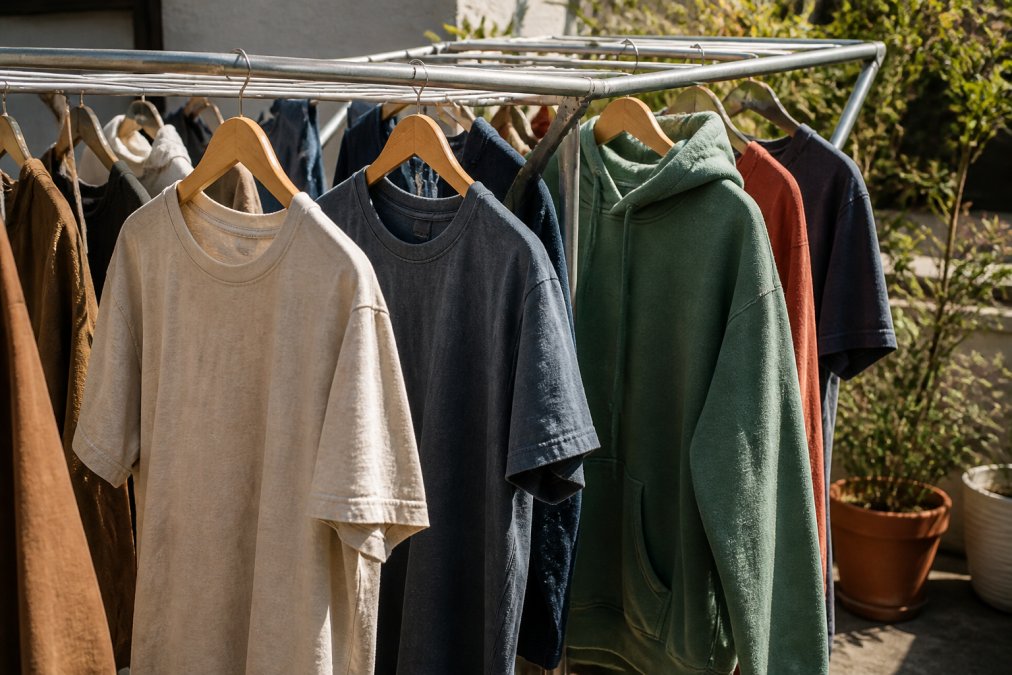
The downside of air drying is time. Clothes take longer to dry, particularly in humid climates or during cooler months. However, the improvement in fabric quality justifies the wait. If you must use a machine dryer, use the lowest heat setting and remove garments while still slightly damp to minimise heat exposure.
For pieces from Steve's Finds designed to feel soft and comfortable from the start, air drying after the initial wash is worth the extra time. It preserves the fabric quality and ensures the garment feels its best.
Machine Maintenance and Water Quality
Your washing machine itself can be a source of stiffness if it's not properly maintained. Detergent residue, fabric softener buildup, and mineral deposits accumulate inside the machine over time, particularly in the rubber seals, drum, and pipes. This buildup transfers back onto clothes during washing, contributing to stiffness and dullness.
Clean your washing machine monthly by running a hot wash cycle with no clothes, using either white vinegar (two cups) or a commercial machine cleaner. This removes buildup and prevents it from transferring to your garments. For machines with a self-cleaning cycle, use that feature regularly.
Water quality directly affects how well detergent works and how easily it rinses away. Hard water, common in many areas, requires adjustments to your washing routine. If you have hard water, consider using a water softening agent in your wash, reducing detergent quantity further, or installing a whole-house water softener if the problem is severe enough to affect multiple appliances.
Testing your water hardness is straightforward. Many water suppliers provide this information on their websites, or you can purchase inexpensive test strips. Knowing your water hardness allows you to adjust your washing routine accordingly, choosing detergents formulated for hard water and using appropriate amounts of softening agents.
Stiff new clothes are a temporary condition, not a permanent flaw. The manufacturing processes that create that crisp texture are necessary for production and transport, but they wash away quickly with the right approach. By understanding the causes, sizing agents, mineral deposits, and excess detergent residue, you can take specific steps to soften your clothes and enjoy them comfortably from the first wear.
Steve's Finds designs pieces meant to feel broken-in and comfortable, like old friends ready for adventure. Our vintage-inspired hoodies and tees are crafted with this philosophy in mind. Washing new garments properly ensures they deliver on that promise, softening into the lived-in comfort that makes our collection special. Start with a gentle pre-wash, use minimal detergent, run extra rinses, and air dry when possible. Your clothes will reward you with the soft, comfortable feel that makes casual wear genuinely enjoyable.
Frequently Asked Questions
How do I get stiffness out of new clothes quickly?
Wash new garments in warm water with a reduced detergent dose, then add a fabric softener or white vinegar to the rinse cycle. Tumble dry on low heat with wool dryer balls, or air dry to avoid static cling and fibre damage. For immediate softness, wear the garment a few times, natural body warmth and movement help relax the fibres. Most stiffness fades within 2-3 washes.
Why does washing new clothes before wearing them matter?
New garments often contain sizing agents, manufacturing finishes, and chemical residues applied during production. Washing removes these stiffening compounds and allows the fabric to absorb moisture properly. It also eliminates potential allergens and dyes that haven't been fixed, reducing skin irritation. Pre-washing ensures your clothes feel softer and more comfortable from the first wear, especially important for vintage-inspired pieces designed to feel lived-in.
How do I prevent pilling on cotton hoodies?
Wash hoodies inside-out in cool water on a gentle cycle to minimise friction. Use a lower detergent dose to reduce residue buildup that weakens fibres. Avoid overloading your washing machine, as tight packing increases pilling. Air dry instead of machine drying when possible, tumble drying creates heat and agitation that damages fabric integrity. Remove pills gently with a fabric shaver if they do form, rather than pulling them.
Does hard water make clothes feel stiffer?
Yes. Hard water contains calcium and magnesium minerals that bind to fabric fibres and detergent, creating mineral deposits and soap scum. These deposits accumulate with each wash, making clothes feel crunchy and stiff. If you have hard water, use a water softener, add white vinegar to your rinse cycle, or switch to a detergent designed for hard water. Testing your water hardness can help you choose the right solution for your laundry.
This article was written using GrandRanker